

 604.506.5068
AI
How AI Can Transform Customs Agencies: Boosting Efficiency and Security

Continue reading "How AI Can Transform Customs Agencies: Boosting Efficiency and Security"
In today’s fast-paced global trade environment, customs agencies play a critical role in ensuring the smooth flow of goods across borders while maintaining security and compliance. However, the increasing volume of international trade, coupled with complex regulations, has made the job of customs agencies more challenging than ever. This is where Artificial Intelligence (AI) steps in as a game-changer. Here’s how AI can revolutionize customs operations:
1. Improved Compliance and Regulatory Adherence
With constantly changing trade regulations, staying compliant can be a daunting task. AI systems can be programmed to stay updated with the latest regulations and automatically flag shipments that may violate specific rules. This reduces the risk of non-compliance and helps businesses avoid costly penalties.
2. Enhanced Risk Assessment and Fraud Detection
AI-powered systems can analyze vast amounts of data in real-time to identify patterns and anomalies that may indicate fraudulent activities or security risks. By leveraging machine learning algorithms, customs agencies can prioritize high-risk shipments for inspection, reducing the need for manual checks on low-risk goods. This not only speeds up the clearance process but also improves accuracy in detecting illegal or non-compliant shipments.
3. Predictive Analytics for Trade Trends
AI can analyze historical trade data to predict future trends, such as seasonal fluctuations in imports and exports. This enables customs agencies to allocate resources more effectively, anticipate potential bottlenecks, and ensure smoother operations during peak periods.
4. Automated Document Processing
Customs operations involve handling a massive volume of documents, such as invoices, bills of lading, and certificates of origin. AI can automate the extraction and verification of data from these documents, reducing human error and speeding up processing times. Natural Language Processing (NLP) can even help interpret unstructured data, making it easier to handle diverse document formats.
5. Streamlined Customs Clearance
By integrating AI into customs clearance processes, agencies can significantly reduce the time it takes to clear goods. AI can automate routine tasks, such as tariff classification and duty calculation, allowing customs officers to focus on more complex cases. This leads to faster turnaround times and a better experience for importers and exporters.
6. Enhanced Supply Chain Visibility
AI can provide real-time tracking and monitoring of shipments, offering greater visibility into the supply chain. This helps customs agencies and businesses alike to anticipate delays, manage inventory more effectively, and ensure timely delivery of goods.
7. Cost Savings and Resource Optimization
By automating repetitive tasks and improving decision-making, AI can help customs agencies reduce operational costs and optimize resource allocation. This allows agencies to focus on strategic initiatives and improve overall service delivery.
8. Strengthened Security
AI can enhance border security by analyzing data from multiple sources, such as cargo manifests, surveillance footage, and sensor data, to detect potential threats. This proactive approach helps prevent smuggling, terrorism, and other security risks.
Conclusion
The integration of AI into customs operations is no longer a futuristic concept—it’s a necessity in today’s global trade landscape. By embracing AI, customs agencies can enhance efficiency, improve security, and provide better services to businesses and consumers. The future of customs is intelligent, automated, and data-driven, and the time to adopt these technologies is now.
What are your thoughts on the role of AI in customs? Let’s discuss!
About the Author
The Best Digital Marketing Insight and Advice
The WSI Digital Marketing Blog is your go-to-place to get tips, tricks and best practices on all things digital
marketing related. Check out our latest posts.
Ready to turn AI insight into a practical business plan?
Speak with an AI ConsultantWe are committed to protecting your privacy. For more info, please review our Privacy and Cookie Policies. You may unsubscribe at any time.
Don't stop the learning now!
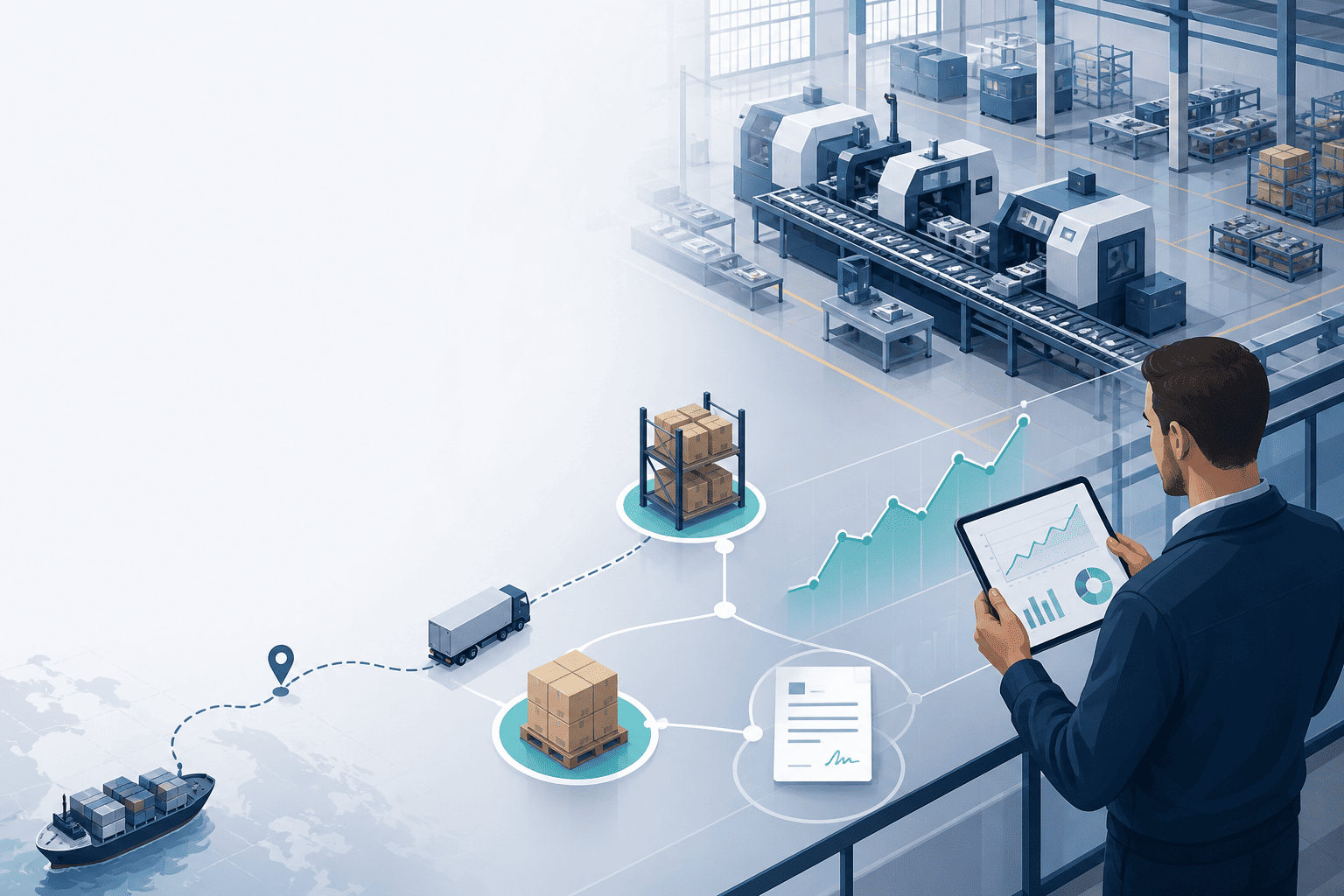
AI for Manufacturing Operations: A Practical Roadmap for Supply Chain Visibility, Procurement, and Demand Forecasting
AI for Manufacturing Operations: A Practical Roadmap for Supply Chain, Procurement, and Demand Forecasting Manufacturers do not need to begin their AI journey with a company-wide transformation program. The most practical starting point is usually a workflow where teams are already losing time: chasing late supplier updates, reconciling inventory data, expediting purchase orders, or revising …
READ MORE
When AI Outgrows Your Team: How to Close the Capability Gap
AI Strategy & Organizational Readiness How to Close the Capability Gap AI initiatives often begin with a few motivated employees testing tools and discovering faster ways to work. But as those experiments become more valuable, they also become more complex. The real question is whether your organization has the strategy, expertise, governance, and capacity required …
Continue reading “When AI Outgrows Your Team: How to Close the Capability Gap”
READ MORE
When AI Outgrows Your Team: How to Close the Capability Gap
AI Strategy & Organizational Readiness When AI Outgrows Your Team: How to Close the Capability Gap AI initiatives often begin with a few motivated employees testing tools and discovering faster ways to work. But as those experiments become more valuable, they also become more complicated. The challenge is no longer simply learning how to use …
Continue reading “When AI Outgrows Your Team: How to Close the Capability Gap”
READ MORE